Beyond the Hype: Practical AI/ML, Design, and Circularity in Automotive
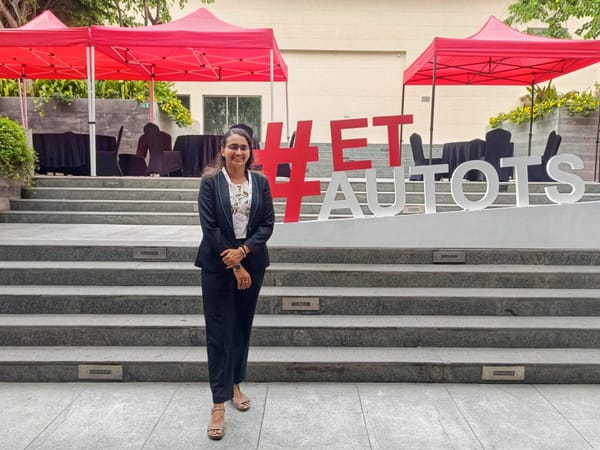
Everywhere now a days we often hear the buzzwords—AI, sustainability, circularity. But what does all of this really mean when the rubber meets the road? At the ETAuto Tech Summit 2025 in Bangalore, the conversation moved beyond the surface, diving into what India’s automotive leaders are actually doing to turn vision into value.
Here’s a closer look at how the industry is maturing its approach to AI/ML, design, and sustainability with practicality, not just promises.
Strategic AI/ML: Moving from Surface to Substance
Artificial Intelligence and Machine Learning are no longer just trends.
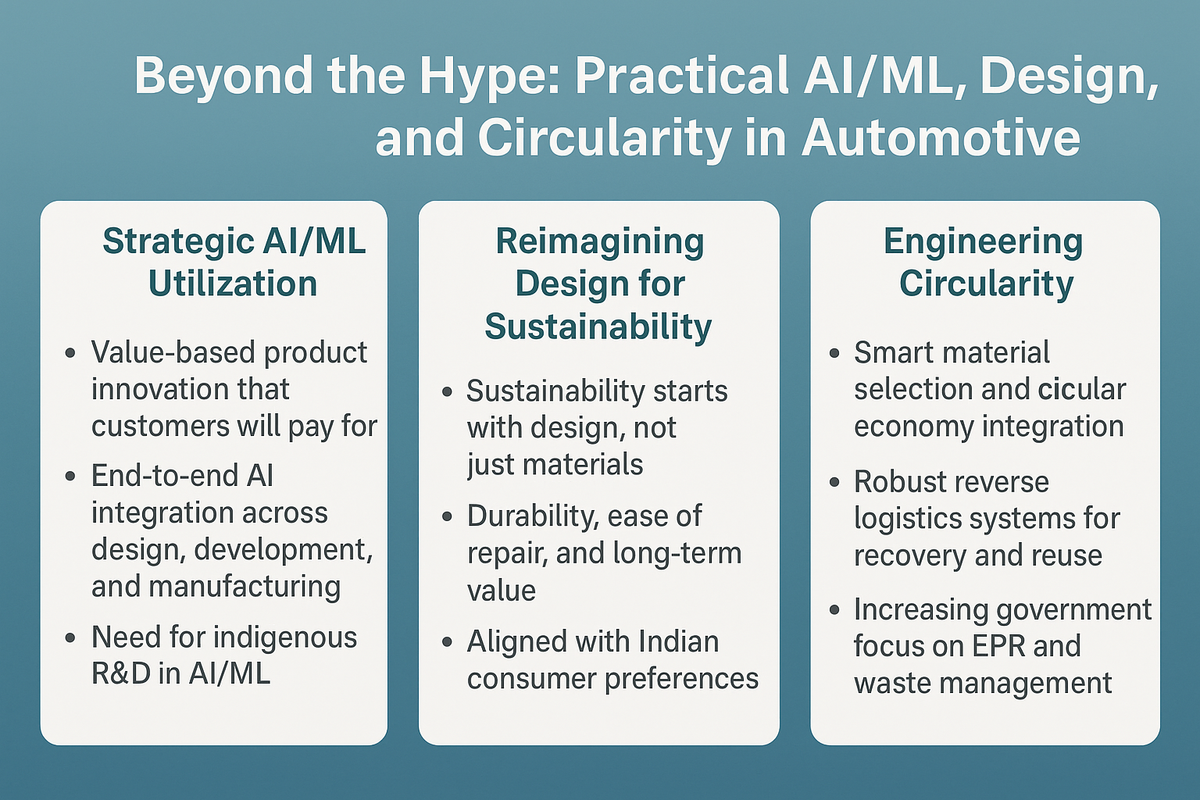
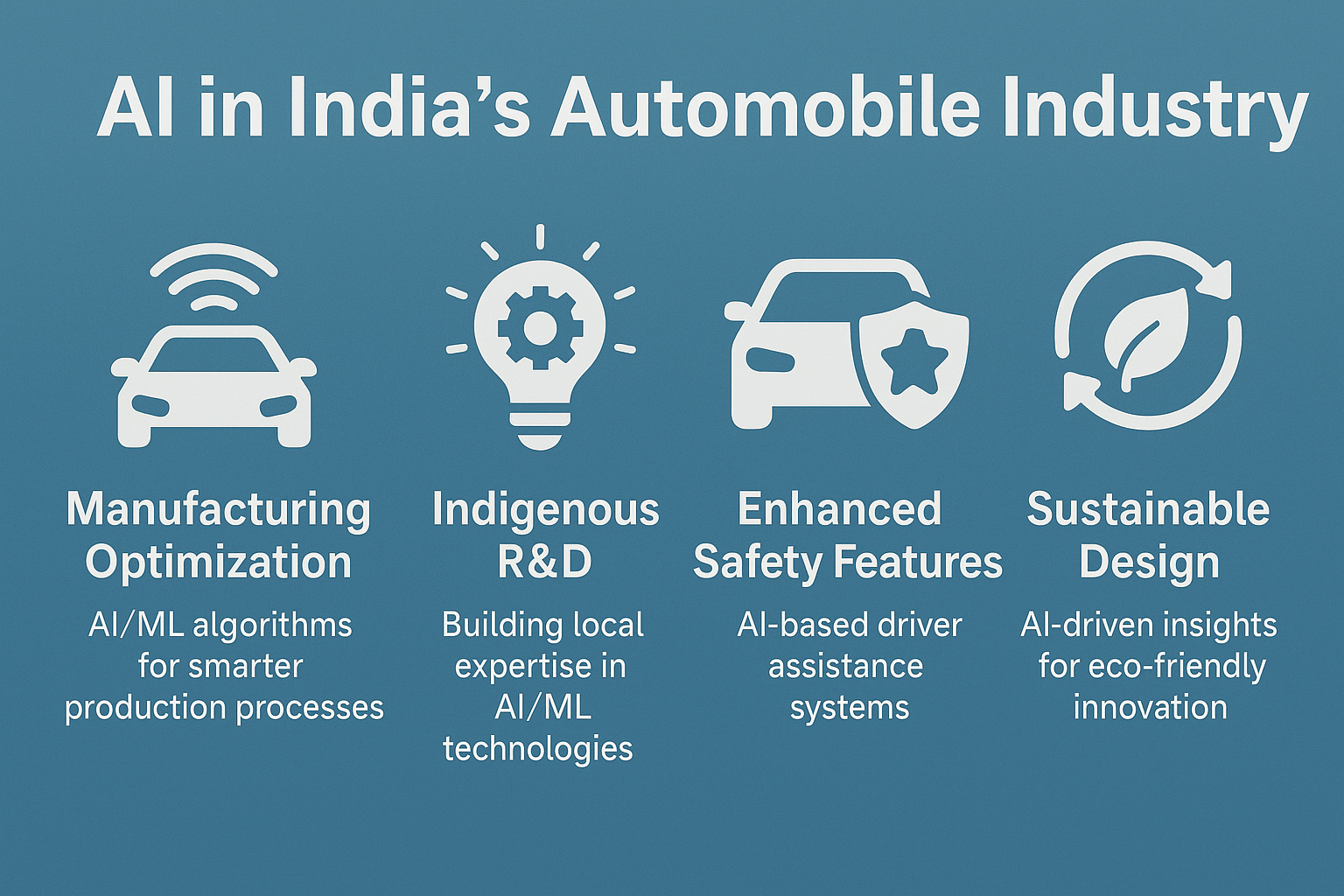
AI is becoming central to how the automotive industry innovates. But speakers at the summit were clear: AI should not be applied just for the sake of it. The focus is shifting to value-based product innovation. Companies are looking to deliver real customer value, even if it comes at a higher price point.
There is a shift now where consumers are open to paying more when they see features that are meaningful and user-focused. To truly benefit, organizations need end-to-end AI integration across design, development, and manufacturing. It’s not just about automating repetitive tasks but embedding AI into decision-making processes that drive efficiency and innovation. Importing AI systems doesn’t work in the long run. India’s challenges and customer behaviors are unique. This makes indigenous R&D in AI essential.
Local data, local talent, and local context must drive how we build AI-driven solutions for India and the world.
Reimagining Design: Where Sustainability Truly Begins
Sustainability doesn’t start with materials. It begins with Design.
Every design decision—from concept to prototype—must consider long-term use, repairability, and customer value. This is especially important in India, where people often keep their cars for 10 to 15 years. The Indian buyer values durability, comfort, and ease of maintenance. So, instead of flashy features, design must focus on intuitive interfaces, easy-to-upgrade systems, and materials that age well over time.
Design teams must also match the pace of manufacturing advancements. As plants adopt smarter, faster processes, designers need to be equally agile, ensuring their ideas are not just creative but practical and scalable.
Engineering Circularity: Closing the Loop
Sustainability is the new cool
One of the most promising shifts in the automotive industry is the move toward a circular economy. It’s no longer just about creating efficient products. It’s about making sure nothing goes to waste. Circularity starts with smart material choices. Using more recycled inputs, natural materials, and components that are easier to separate and reuse makes the product lifecycle more sustainable.
But materials are just one part of the puzzle. Companies are now redesigning reverse logistics—systems to bring used components back into the supply chain. Products are being built to be dismantled. The aim is for as many parts as possible to be recovered, reused, or repurposed.
OEMs are also working more closely with suppliers and recyclers, sharing knowledge and aligning their goals. This marks a cultural shift where sustainability isn’t a side goal—it’s built into the DNA of how companies operate.
EPR and Waste Recycling
Regulations Catching Up with Reality
Policy is becoming a powerful force in shaping how the automotive industry manages its environmental impact. Extended Producer Responsibility, or EPR, is no longer optional.
Recent regulations like the E-Waste Management Rules 2022 and new ELV norms are making manufacturers responsible for the end-of-life stage of their products. Producers must account for the entire lifecycle of their products. Compliance is only the beginning. The real opportunity lies in rethinking how products are designed, built, and managed long after they leave the showroom.
Looking Ahead: A Shift in Mindset
The biggest takeaway from the ETAuto Tech Summit is that the automotive industry in India is undergoing a quiet but determined transformation. AI is being used with purpose, not just for effect. Design is shifting toward long-term value. Circularity is now a strategy, not a buzzword. And policy is actively guiding industry behavior.
This is India’s moment to lead not by following global trends but by building a model that fits our people, our markets, and our challenges. The road ahead may be complex, but with a clear, grounded approach, the journey promises to be both sustainable and truly innovative.